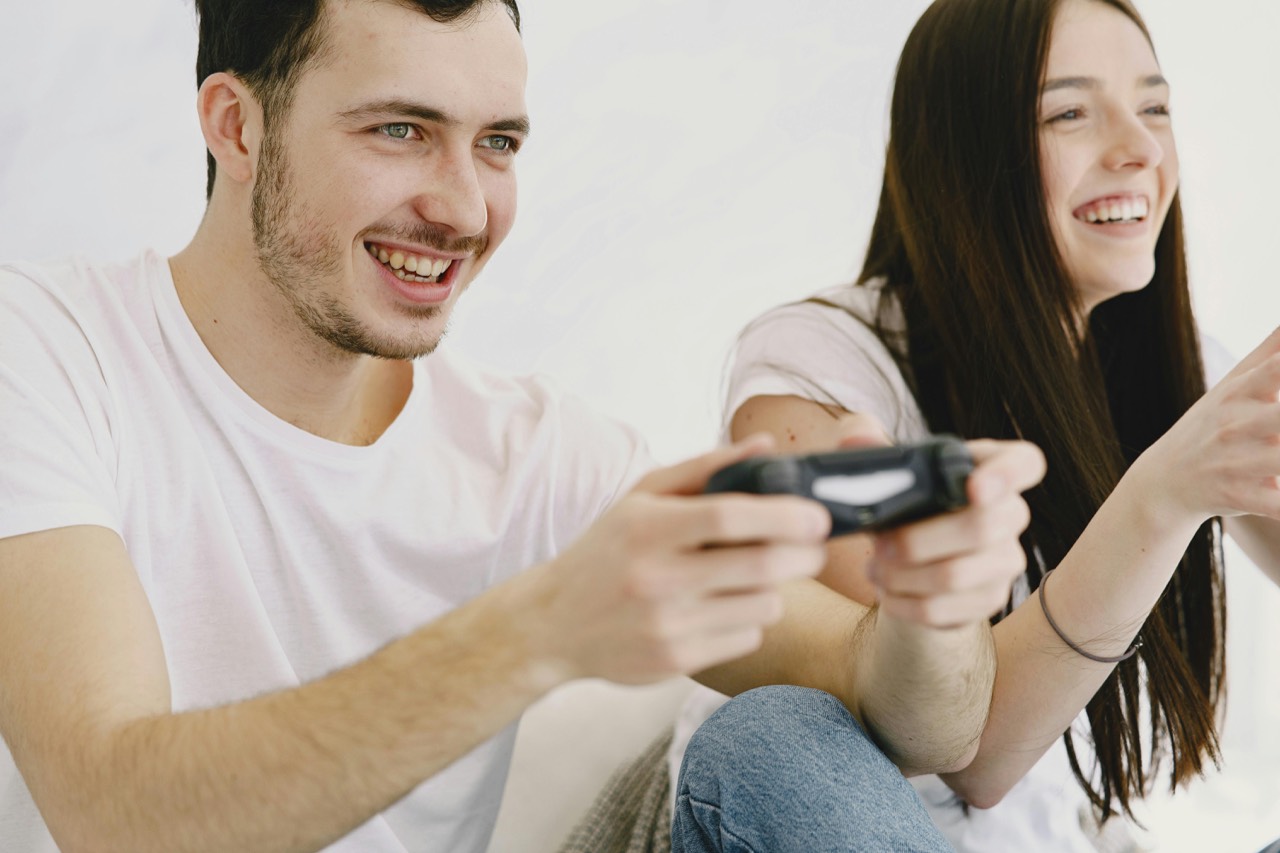
Why Games Work as Mental Health Tools
Mental health conditions share a common thread: they hijack your attention. Anxiety locks your focus on future threats. Depression anchors it to past failures and present emptiness. ADHD scatters it in every direction at once. Low confidence turns it inward, amplifying self-doubt.
Games reclaim that attention. They create a structured environment with clear rules, immediate feedback, and achievable goals. When you are deciding whether to cash out in Cash or Crash or planning your next move in Checkers, your brain is fully engaged with the task at hand. The anxious thoughts, the depressive fog, the restless energy — they cannot compete with a game that demands your complete focus.
This is not distraction for its own sake. Games provide three things that mental health conditions often strip away: a sense of control (your decisions matter), a sense of progress (you can see yourself improving), and a sense of mastery (you get better with practice). These are the building blocks of psychological well-being.
Games for Anxiety — Breaking the Worry Loop
Anxiety feeds on rumination — the endless replay of worst-case scenarios. The most effective way to break a worry loop is to occupy your working memory with something that requires just enough attention to crowd out the anxious thoughts, but not so much that it creates new stress.
Calming games for high anxiety
When anxiety is spiking, your nervous system is already overstimulated. You need games that are engaging without being intense. Plinko is ideal — drop a ball, watch it bounce through pegs, see where it lands. The gentle randomness is soothing, the visual rhythm is almost meditative, and there are zero decisions to stress about. Keno works similarly — pick a few numbers, press draw, watch the results. The pace is entirely in your hands.
Focus-demanding games for anxious overthinking
Sometimes calming games are not enough because your mind is too active to settle into something passive. In that case, you need a game that absorbs every bit of your mental bandwidth. Checkers is the best option — planning multiple moves ahead, reading your opponent's strategy, and evaluating board positions leaves no room for anxious thoughts. The worry loop cannot compete with a complex board state that demands your full concentration.
Anxiety Toolkit
Games for Depression — Rebuilding Motivation
Depression often presents as a flatness — low energy, low motivation, difficulty starting tasks, and a pervasive sense that nothing matters. The challenge is finding an activity engaging enough to break through the apathy without requiring the energy that depression has drained away.
Quick-win games to spark momentum
When motivation is near zero, you need a game that delivers a win in under thirty seconds. Tower is excellent for this — each floor you climb is a small victory, and cashing out at the right moment delivers a satisfying sense of achievement. Hi-Lo provides the same effect with even less effort — predict higher or lower, see the result instantly, and feel the small rush of a correct guess.
These micro-wins matter more than they seem. Depression tells you that your decisions do not matter and that nothing you do makes a difference. Every successful cash-out, every correct prediction, every cleared floor provides a tiny counter-argument. You made a choice. It worked. That matters.
Progression-based games for longer sessions
On days when you have a bit more energy, games with visible progression can rebuild the sense of forward movement that depression erodes. Playing through a round of Lucky Mines where you carefully reveal tile after tile, watching your multiplier grow with each safe choice, creates a tangible sense of progress that translates into a better mood.
Depression Toolkit
- Cannot get started: Hi-Lo — one tap, instant result, zero barrier
- Need a win: Tower — each floor is a visible achievement
- Feeling numb: Cash or Crash — the rising multiplier creates genuine excitement
- A bit more energy today: Lucky Mines — satisfying progression with each revealed tile
Games for ADHD — Channeling Restless Energy
ADHD brains crave stimulation. When the current task is not stimulating enough, the ADHD mind goes looking for stimulation elsewhere — often in the form of impulsive phone-checking, task-switching, or getting lost in a hyperfocus rabbit hole. Games can serve as a structured outlet for that stimulation-seeking behavior.
Fast-feedback games that match ADHD tempo
The best games for ADHD deliver results in seconds, not minutes. Dice is perfect — choose over or under, roll, see the result in under three seconds. Cash or Crash keeps the ADHD brain locked in because the multiplier moves constantly, creating an ongoing stream of stimulation. Hi-Lo offers rapid card flips with instant feedback on every prediction.
Hyperfocus-friendly games for productive absorption
ADHD hyperfocus is a double-edged sword — it can lock you into an activity so deeply that hours disappear. With the right game, hyperfocus becomes productive rather than problematic. Checkers against a harder AI difficulty can trigger a healthy hyperfocus state where your strategic thinking is fully engaged. The key is setting a timer so the hyperfocus does not extend beyond a reasonable session.
ADHD Toolkit
- Restless energy: Dice or Cash or Crash — instant stimulation, rapid rounds
- Need to focus: Checkers — channels attention into deep strategy
- Quick dopamine: Hi-Lo — every card flip is a micro-reward
- Impulsive urge: Lucky Mines — teaches measured risk-taking with immediate consequences
Games for Low Confidence — Rebuilding Self-Belief
Low confidence often stems from a belief that your decisions are wrong, your abilities are inadequate, and your efforts will not pay off. Games directly counter these beliefs by creating a safe environment where you can make decisions, see consequences, and gradually build evidence that you are capable of getting better at things.
Skill-tracking games that show growth
The most powerful confidence-builder is visible improvement over time. When you first play Checkers against the AI, you might lose repeatedly. But as you learn to recognize patterns, plan ahead, and anticipate the AI's moves, you start winning. That trajectory — from losing to competing to winning — mirrors the confidence-building process in real life. You tried, you persisted, and you improved.
Hi-Lo provides a similar confidence arc. At first, your predictions feel random. Over time, you develop an intuition for card probability. When your prediction accuracy improves, you have concrete proof that your judgment is getting sharper — and that evidence of growth transfers to how you feel about your abilities in general.
Low-stakes decision practice
People with low confidence often avoid making decisions because they fear choosing wrong. Games offer a risk-free environment to practice deciding. Every round of Tower asks: climb or cash out? Every turn in Lucky Mines asks: which tile? The stakes are zero, but the decision-making muscle gets exercised. Over time, making choices in games trains you to trust your judgment in everyday situations too.
Confidence Toolkit
- Fear of deciding: Tower — practice making choices with zero consequences
- Feeling incompetent: Checkers — track your improvement over days
- Need a quick boost: Hi-Lo — correct predictions reinforce trust in your judgment
- Self-doubt spiral: Lucky Mines — visible multiplier growth proves your choices work
Game Recommendations by Condition
Use this table as a quick reference to find the right game for what you are experiencing right now.
| Condition | Best Games | Why |
|---|---|---|
| Generalized anxiety | Plinko, Keno | Calming pace, zero decisions, meditative rhythm |
| Anxious overthinking | Checkers | Absorbs all mental bandwidth, no room for worry |
| Depression / low motivation | Tower, Hi-Lo | Instant wins, minimal effort to start, visible progress |
| ADHD restlessness | Dice, Cash or Crash | Rapid feedback, constant stimulation, short rounds |
| ADHD need for focus | Checkers, Lucky Mines | Channels hyperfocus into productive strategy |
| Low confidence | Checkers, Hi-Lo | Visible skill growth, evidence of improving judgment |
| Social anxiety | Any solo game | Engagement and stimulation without social pressure |
Building a Daily Mental Health Gaming Routine
Consistency amplifies the benefits. A brief daily session is more effective than occasional long binges. Here is a template you can adapt to your schedule and needs.
- Check in with yourself (30 seconds). Before opening a game, ask: what do I need right now? Calm? Energy? Focus? A win? Let the answer guide your game choice.
- Play for 15 to 20 minutes. Set a timer. This is long enough to shift your mental state but short enough to fit into any routine.
- Notice the shift (30 seconds). After playing, take a moment to observe how you feel compared to before. If a particular game consistently helps, remember that for next time.
Sample Routine by Need
- Morning anxiety: 5 min of Plinko to calm your nerves before work
- Midday ADHD slump: 5 min of Dice or Hi-Lo to reset your focus
- Afternoon low mood: 10 min of Tower to rebuild momentum with quick wins
- Evening overthinking: 15 min of Checkers to quiet a racing mind
All games are free on Crash or Cash. No signup, no download, no real money involved.
Important Boundaries — Games as a Tool, Not a Fix
Games are a complement to mental health care, not a replacement. They work best as one tool in a broader self-care toolkit that includes sleep, physical activity, social connection, and professional support when needed.
If you are experiencing persistent anxiety, depression, or other mental health challenges that interfere with daily life, please reach out to a qualified mental health professional. Games can support your well-being between sessions, during difficult moments, and as part of a daily self-care routine — but they are not therapy.
Take a moment for your mental health. Pick a game that matches what you need right now and give your mind a structured, satisfying break.
Play Free Games NowFrequently Asked Questions
Can board games really help with anxiety?
Yes. Board games interrupt anxious thought loops by demanding focused attention on a structured task. Calming games like Plinko and Keno provide soothing, repetitive engagement, while strategy games like Checkers redirect mental energy away from worry and toward problem-solving. The key is matching the game intensity to your current anxiety level.
Which games are best for people with ADHD?
Short-round games with instant feedback work best for ADHD restlessness. Cash or Crash, Hi-Lo, and Dice all provide rapid results that match ADHD attention patterns. For channeling hyperfocus productively, Checkers and Lucky Mines offer deeper strategic engagement.
How long should I play games for mental health benefits?
Sessions of 15 to 20 minutes are the sweet spot. This is long enough to shift your mental state and enter a flow state, but short enough to avoid fatigue or diminishing returns. A daily 15-minute session is more beneficial than an occasional two-hour binge. Set a timer to keep sessions consistent.
Can games replace therapy for mental health conditions?
No. Games are a complementary self-care tool, not a replacement for professional treatment. If you are experiencing serious anxiety, depression, ADHD challenges, or other conditions that affect your daily functioning, seek support from a qualified mental health professional. Games can be a helpful part of your self-care routine alongside professional guidance.
Are single-player games effective for mental health?
Absolutely. Single-player games provide flow states, achievement, emotional regulation practice, and a sense of control — all of which support mental well-being. For people with social anxiety, solo games offer engagement and stimulation without social performance pressure, making them especially valuable.
Can gaming become unhealthy?
Any activity can become unhealthy if it replaces essential responsibilities, disrupts sleep, or becomes your only coping mechanism. The key is intentionality: set time limits, play mindfully, and ensure gaming is one part of a broader self-care toolkit that includes physical activity, sleep, social connection, and professional support when needed.